Erosion Control & Grading in Moultrie for properties losing soil to runoff and sites with standing water problems
South Georgia receives intense seasonal rainfall that turns poorly graded properties into mud channels, washes out driveways, and cuts gullies through fields and building sites. Bottomland Brush Control LLC grades land to redirect water flow and installs erosion controls like culverts, berms, and drainage swales that protect soil and infrastructure during heavy weather. Proper grading changes how water moves across your property—you see runoff channeled into designated paths rather than cutting random erosion trails, driveways that remain passable after storms, and building pads that stay dry instead of collecting standing water.
Grading involves more than pushing dirt into smoother contours. The crew assesses natural drainage patterns, identifies high and low points that affect water movement, and calculates slopes that move runoff quickly enough to prevent pooling but slowly enough to avoid erosion velocity. Culvert sizing depends on upstream watershed area, expected storm intensity, and whether the drainage path crosses access roads or field edges. In Moultrie and surrounding counties, property grading often integrates with driveway installation because both require coordinated elevation changes and drainage infrastructure to function long-term.
Schedule a site assessment to identify erosion patterns, drainage bottlenecks, and areas requiring grade adjustment or runoff control.
Drainage That Prevents Washout and Pooling

What Proper Grading Requires
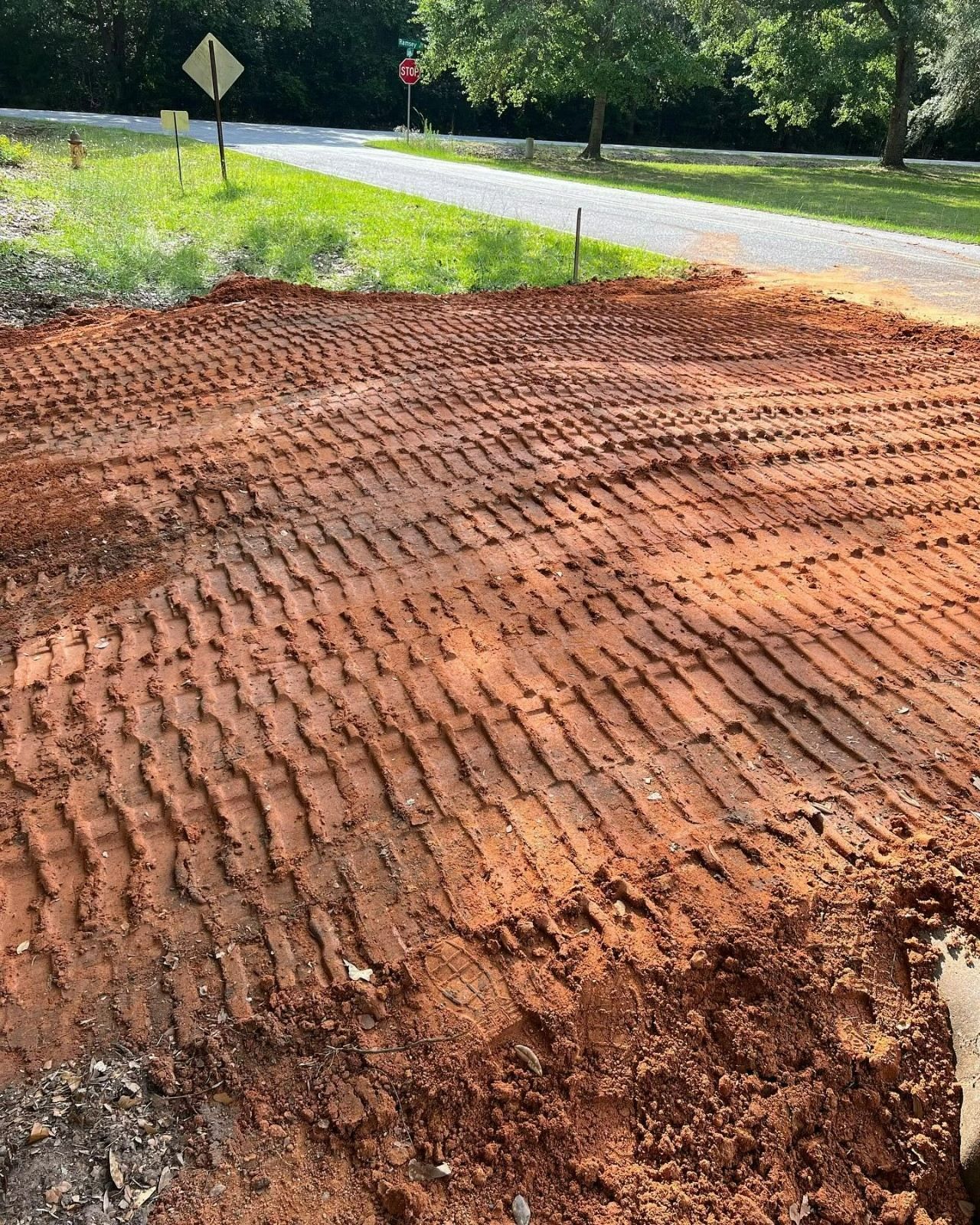
Erosion control begins with understanding where water originates, how much volume typical storms produce, and where runoff can discharge without creating downstream problems. Grading equipment shapes land to create positive drainage away from structures, slopes driveway surfaces toward edges rather than centers to prevent washboarding, and builds berms or swales that intercept sheet flow before it gains enough velocity to cut channels. Culvert installation at low crossing points allows water to pass under driveways without overtopping or undermining gravel base layers.
After grading is complete, water moves predictably across the property during rain events, driveways shed runoff to designated drainage paths instead of eroding from the center outward, and building sites remain accessible even during wet months when ungraded properties turn impassable. Erosion that previously carved gullies or exposed roots stops advancing because water no longer concentrates in problem areas. Vegetation reestablishes more easily on graded slopes because topsoil stays in place rather than washing downhill with each storm.
Grading work does not include permanent paving, utility installation, or landscaping, but it creates the stable foundation required before those improvements proceed. Seasonal timing matters—grading during dry months prevents equipment from compacting wet soil into hardpan layers that resist root growth and water infiltration. Sites that require both clearing and grading benefit from coordinated scheduling so one phase prepares the ground for the next without redundant equipment mobilization.
Common Questions About This Service
Landowners dealing with erosion damage, poor drainage, or site preparation needs in Moultrie often need clarity on grading methods, drainage solutions, and project timing before work begins.
What causes erosion problems on rural properties in Moultrie?
Erosion accelerates when vegetation is removed without grade adjustment, when natural drainage paths concentrate runoff into narrow channels, or when driveways and building pads disrupt original water flow patterns without compensating drainage infrastructure.
How do you determine the correct culvert size for a driveway crossing?
Culvert sizing depends on the watershed area draining through the crossing point, the slope of incoming and outgoing channels, and local storm intensity data, with undersized culverts causing backups and oversized installations wasting money without improving drainage performance.
Can grading fix existing gullies and erosion damage?
Grading fills eroded channels, reshapes slopes to reduce water velocity, and redirects future runoff away from damaged areas, but severe gullies may require additional erosion control measures like riprap or vegetation establishment to stabilize repaired sections.
When is the best time to schedule grading work in South Georgia?
Dry months allow equipment to move across sites without causing compaction or rutting, but grading completed before rainy seasons gives drainage infrastructure time to prove effective and allows any necessary adjustments before heavy storms test the system.
Does erosion control work include seeding or planting to stabilize soil?
Grading services focus on shaping land and installing drainage structures, but the crew can coordinate with vegetation establishment if the project scope includes soil stabilization beyond mechanical earthwork.
Bottomland Brush Control LLC integrates erosion control with broader land clearing and site preparation projects across Colquitt County, which ensures drainage solutions account for overall property use rather than treating symptoms in isolation. Request a property evaluation to review current erosion patterns and drainage needs in Moultrie.