Dirt Work & Site Preparation in Moultrie for properties requiring grading, fill placement, and drainage control before construction
South Georgia red clay and seasonal rain cycles demand specific preparation before any structure goes up. Bottomland Brush Control LLC handles site preparation across Moultrie and Colquitt County with full grading, material placement, and erosion control that accounts for post-storm access and drainage challenges common to this region. Over six years of continuous site work means your house pad or commercial lot gets shaped to elevation with compaction standards that prevent settling and water problems after the first heavy rain.
Site preparation involves clearing vegetation, excavating to the required depth, grading to specified elevations, and compacting fill material so the surface holds weight and sheds water correctly. Red clay in this area can create drainage issues if not graded with proper slope and material layering, and summer heat combined with afternoon thunderstorms means timing and sequencing matter for access roads and staging areas.
Schedule a site survey to evaluate grading requirements and material needs for your building location.
Sites Ready for Building in Any Season
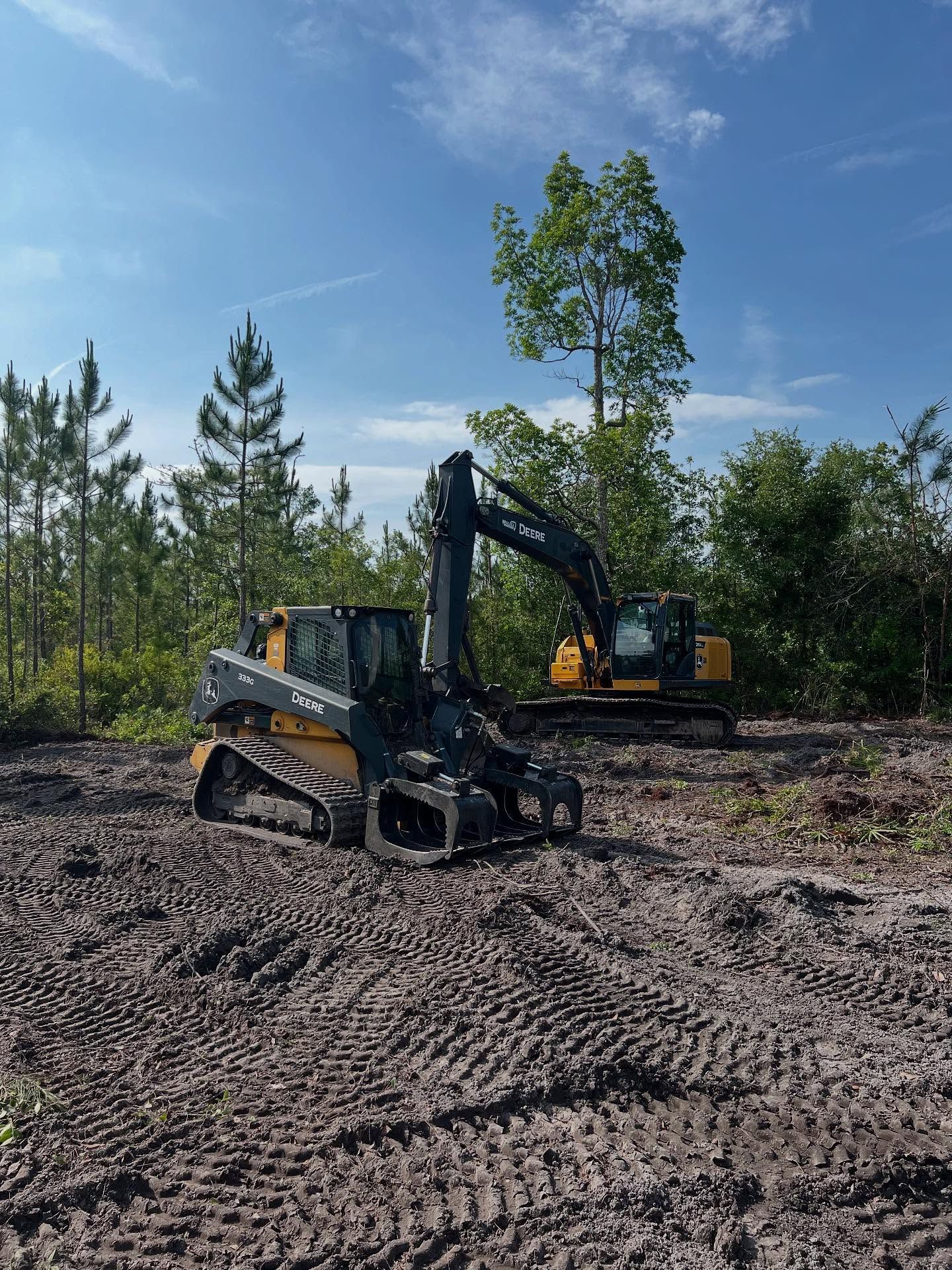

What Proper Site Preparation Delivers
The process starts with a full site survey to establish existing elevations and drainage patterns, followed by vegetation removal and excavation to reach stable subgrade. Material is then placed in layers, with each lift compacted to prevent future settling, and final grading creates slopes that direct water away from the building footprint and toward designated drainage paths or retention areas. Driveway approaches are coordinated with the house pad to maintain consistent access during construction, and culvert placement is integrated if the site crosses existing drainage channels.
Once grading is complete, you see a level building surface that holds its shape through weather cycles, with no standing water after rain and clear access routes for equipment and material deliveries. The pad remains stable under equipment weight, and erosion control measures keep soil in place during the construction phase. Driveways connect smoothly to the pad without steep transitions, and any required fill material is placed and compacted so it does not shift or wash out during storms.
Site preparation also includes coordination with utility installation, so trenches for water, septic, or electrical lines are planned before final grading locks in elevations. Material haul-off removes unsuitable soil, and additional fill is delivered and certified if the pad needs to be raised above flood zones or existing grade..
What to Know Before Site Work Begins
Site preparation in Moultrie often raises questions about material requirements, timing around weather, and how grading affects drainage long-term. The following answers address common concerns for property owners and builders working in South Georgia.
What does a full site survey include before grading starts?
The survey establishes existing elevations across the property, identifies natural drainage paths, locates any underground utilities or easements, and determines how much cut or fill is needed to reach the target building height. This data drives the grading plan and material estimate.
How does red clay in Moultrie affect site preparation work?
Red clay holds water and becomes slick when saturated, which affects compaction timing and equipment access. Grading schedules often avoid periods right after heavy rain, and material placement includes proper layering so water does not pool within the fill. Clay also requires specific compaction methods to reach stable density.
When is the best time to start site work in South Georgia?
Late fall through early spring generally offers more consistent weather windows, though work continues year-round with adjustments for heat and storm cycles. Starting before the main construction season allows time for the pad to settle and any erosion control measures to establish before framing begins.
What happens if the site needs additional fill material?
Fill is delivered by the truckload and placed in lifts, with each layer compacted before the next is added. The material is tested for suitability, and the final elevation is verified with survey equipment to match building plans. All fill placement is documented for permitting and inspection requirements.
How is drainage managed during and after site preparation?
Grading creates slopes that direct runoff away from the building pad toward swales, retention areas, or existing drainage channels. Temporary erosion control may include silt fencing or straw bales during construction, and final landscaping integrates with the grading plan to maintain water flow patterns.
Bottomland Brush Control LLC coordinates site preparation with your construction timeline and local inspection requirements to keep the project moving once grading is complete. Request a grading estimate based on your property survey and building footprint to establish material quantities and schedule.